

For Kelly Gilbert, a 2012 Morgan graduate and now an Integrated Science & Biology teacher, donating blood is vital because she has seen the importance of life-saving donations firsthand. “I personally had a family member who needed a lot of blood transfusions during her cancer treatment. If it weren’t for blood donations, she would not have survived as long as she did. Having that personal connection to see the true impact of blood donation has motivated me to ensure we continue doing blood drives at Morgan and making as great [of] an impact as we can,” Mrs. Gilbert said
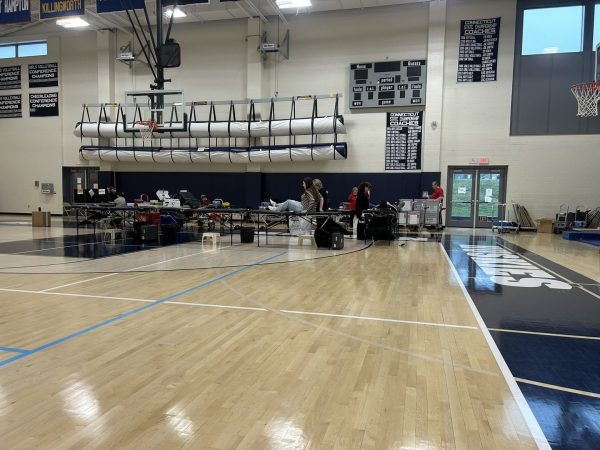
The American Red Cross Blood Drive at The Morgan School is hosted by The National Honors Society. The Blood Drive this year was particularly successful, collecting 39 units, beating the goal that the American Red Cross had set. 1 unit of blood is equivalent to a pint. 39 units equate to up to 117 lives saved.
Unfortunately, not every blood drive is such a success; the drive at Morgan just last year fell short of expectations. Mrs. Gilbert attributes the result to the timing in relation to the April break and conflicts with sports. “We were able to learn from that experience and make some changes for this year to have the drive be more successful,” she said.
Mrs. Gilbert puts up with the stress that comes with running the blood drive. “While there is a lot of planning, organization, effort, and stress in running a blood drive, making a real impact and helping to save lives is worth every minute of it,” Said Mrs. Gilbert
The blood drive also brings in the opportunity to help without donating blood. NHS members are greatly appreciated at the blood drive and are expected to be supportive and compassionate with nervous donors as well as strong leaders with a willingness to take initiative.
The most necessary component of the blood drive is the donors, but for every first-time donor, it can be a nerve-racking experience. A great way to break the ice with the blood drive is by witnessing active donations to ease the mind. “Some people are afraid of needles and/or blood, which causes significant hesitation,” said Mrs. Gilbert.“The other biggest hesitation is typically with our student-athletes. When you donate blood, you cannot participate if your team has a contest that day, and you cannot practice at 100% effort,” says Mrs. Gilbert, going on to say, “we purposely scheduled the drive to ensure no games/matches/meets were happening that day; some student athletes did not want to hinder their ability to fully practice.”
The most common deferral reasons are either high pulse rates or low hemoglobin. Deferrals happen at every blood drive, and are expected; however, the deferral rate is considered low in terms of high school blood drives. “We had 5 official deferrals. A deferral is when someone comes to donate, but cannot complete the procedure, which can happen for a multitude of reasons,” Mrs. Gilbert said.
Senior Nathan Levy, a returning donor for the Morgan Blood Drive, said, “I’ve always done the blood drive because it is a great way to help the community.”
The second experience of donating is typically more comfortable; there are also some other factors that bring donors back to donate more. “Often, blood donors realize after donating the first time that the process is easier and less painful than they expected. The positive experience with a first-time donation often leads to repeated donations. Many donors download the American Red Cross Blood Donation App, which can show them where their blood went to be used. Seeing the impact your donation can have in the real world is a strong motivation to do it again. The free t-shirts, snacks, and getting out of class helps too,” said Mrs. Gilbert.