In a world where technology is advancing faster than ever, the Clinton Public Schools Technology Education Department is not just keeping up–it’s leading the way, providing students with hands-on opportunities in robotics, computer science, and cyber security. This approach is reflected in technology courses at The Morgan School and Jared Eliot Middle School, where project-based learning, critical thinking, and collaboration helps students build real-world problem-solving skills while gaining industry-relevant experience.
The foundation starts at Jared Eliot Middle School, where technology education teachers Michael Hogle and Jared Stevens lay the groundwork for future success by introducing fifth and sixth grade students to Applied Physics and Fabrications through the safe and proper operation of power hand tools and woodworking equipment.
In the upper academy, students in grades 7 and 8 get acquainted with coding, engineering, and manufacturing alongside Hogle, while also taking robotics with Stevens. Seventh graders collaborate to build and program robots using RobotC in Intro to Vex Robotics, which serves as the introductory level course to the robotics class offered at the high school.
This year, Clinton Public Schools (CPS) launched a new robotics course for eighth graders that is funded by a grant from Electric Boat: SeaPerch & Electrical Systems. SeaPerch is an underwater tethered robotics program where students learn how to build and operate Remotely Operated Vehicles (ROVs) in a competition-based learning environment. The course not only allows students to continue developing their experience with robotics before entering high school, but also reinforces CPS’s commitment to marine science education as well.
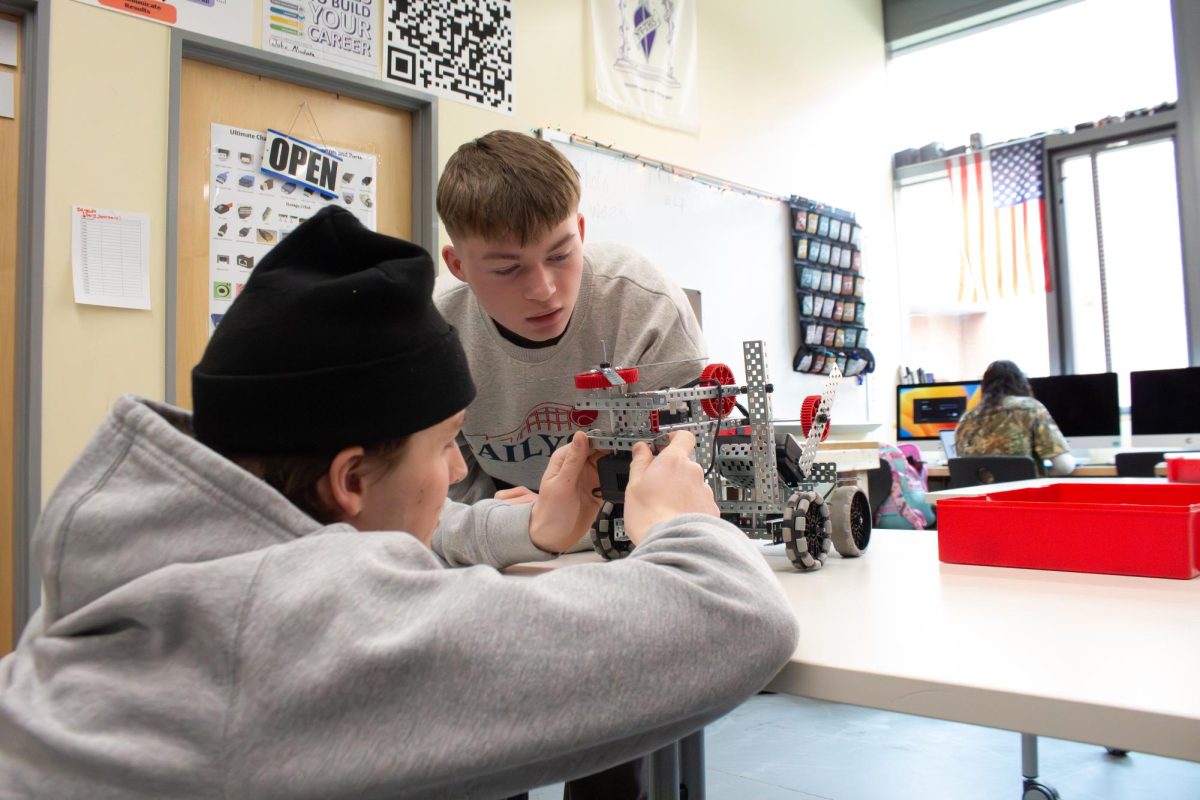
With already plenty of exposure in the field, Clinton students have the opportunity to continue hands-on tech learning during their time at Morgan. The Robotics course offered at the high school is taught by technology education teacher Alex DiStefano, and builds directly on students’ experience with the VEX program from middle school. Students compete in balloon-popping games and coding obstacle courses, engineer rope-climbing robots, and most notably earn their commercial drone license.
At the high school level, students are not just learning robotics–they’re learning how to think. According to DiStefano, “The goal of robotics is to teach critical thinking.” This is especially relevant in today’s AI-driven world. “Because of ChatGPT and all the AI we have, a lot of things come to us very easily… with robotics they have to use critical thinking and work as a group to solve different problems.”
DiStefano joined Morgan’s technology education department in the fall of 2024 along with Chad Neri and John Madura, who was a math teacher for 12 years at the high school before making the switch to tech ed. During this period of transition in the department, CPS took the opportunity to rebuild and expand its tech offerings. As Madura explained, “We decided to make a bigger investment in… computer science, information technology, and operational technology.”
AP Computer Science Principles was renewed as a college-level course that introduces students to modern computing, while Introduction to Data Science was brought over from the math department to broaden the school’s computing offerings. Data Science is a cutting-edge math course that gives Morgan students experience with a UCLA class, and a well-regarded program in industry: R/RStudio.
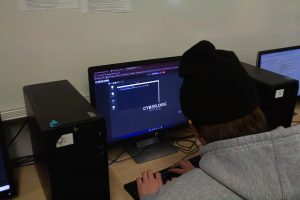
Cybersecurity was added to the program at the start of the 2024-25 school year, introducing students to topics such as encryption, cryptography, ethical hacking, and network defense. The course is taught by Madura, who brings five years of experience at the National Security Agency, where he worked primarily in signals intelligence and cryptology. His work focused on the information insurance side of cybersecurity, particularly counterintelligence and the exploitation of cell phone data. Building on that experience, Madura explained that “a lot of the principles that we built this class on are really kind of related to what you would learn in a basic course for signals intelligence in the military.” As technology continues to evolve, he emphasized the growing importance of the field, “As technology increases, honestly, cybersecurity demands increase… it benefits both just a consumer of the network… and professionals as well.”
Recognizing robotics and computer science as modern, in-demand fields that play a role across nearly every industry, Clinton Public Schools has made a sustained commitment to preparing students through technology education that begins in middle school and continues through high school. This pathway is designed to equip students with the skills and knowledge needed to make informed decisions about future careers and post-secondary education.
Looking ahead, CPS continues to expand its offerings, with the addition of a Foundations of Computer Networks course next year, and the potential of integrating robotic arms and artificial intelligence fundamentals into the classroom in the near future.