
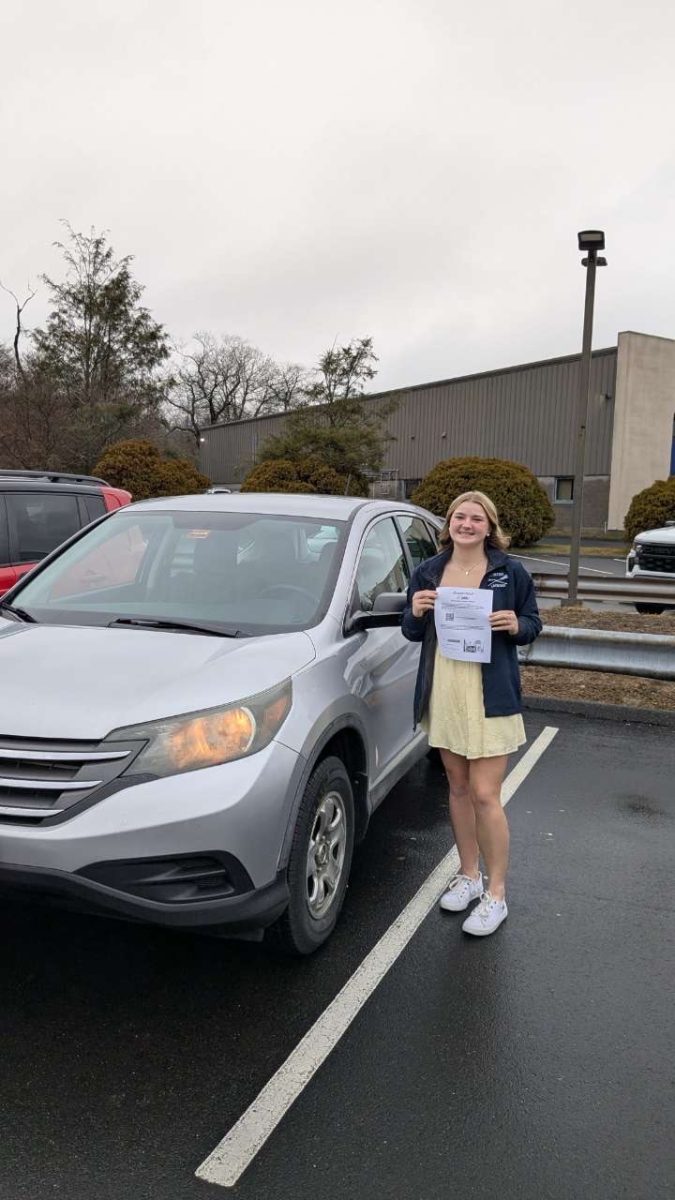
Finally being able to drive is a very exciting moment in a teenager’s life. No more begging parents to drive them everywhere, no more stressing about carpooling, and finally being able to go anywhere, anytime with friends. However, that doesn’t make it safe. According to Moore O’Brien and & Foti, there have been over 9,000 accidents involving teen drivers in Connecticut so far this year.
We found two students here at Morgan who have had experiences that show teen driving isn’t all that teenagers have imagined:
Junior Emerson Dunning got her license this summer in June and about a month after, she went out to lunch with her friend, breaking a commonly ignored state rule, which isn’t uncommon as many teenagers don’t wait a year to drive their friends. Dunning and her friend decided to stop to go shopping in Old Saybrook, whose cops are known across Morgan for being a bit too bored and strict, looking to pull people over every chance they get – and not being very lenient when they do.
As Dunning was parking, she came very close to a car but didn’t think she hit it. “To my knowledge, I didn’t hit the car, but there were these two ladies, and I guess they thought I hit the car and called the police on me,” said Dunning.
When the police first pulled her over, Dunning was very confused, as she didn’t think she did anything wrong. On Dunning’s car, there had already been a scratch from previous use, as it was her father’s old car, which didn’t help in her case.
“I had to pull into the parking lot, and I had to call my parents, because obviously I couldn’t drive home. They took my license to the DMV or police station for 48 hours, so I couldn’t drive it at all.” Fortunately, the lady whose car the police thought she hit was very lenient and forgiving of the situation and told the police everything was fine.
“I was obviously nervous because, first of all, I don’t like getting in trouble. I’m not a person to typically get in trouble. But also I didn’t really think I had done anything wrong besides the fact that someone was in my car; which yes, I know that’s illegal, but I didn’t think I physically did anything wrong to get pulled over. I was honestly just confused.”
Dunning didn’t get a ticket for hitting a car, but she did get a ticket for having her friend in the car along with her. In the end, her license got suspended for 30 days, and she had to pay $175 to get it back. Now, Dunning is very careful about following the rules and doesn’t drive anyone except her family.
One morning on the way to school, senior Camryn Mazzarella was making her way to school, about a mile from campus. She was turning left off of a bridge onto the main road. “I was turning left, and this truck was coming from the right, and no cars were coming from the left,” said Mazzarella. After the truck passed, she started pulling out, but at the last minute, the truck decided to turn down the bridge, causing Mazzarella to get stuck behind the truck that was quickly turning.
“I was pulled out enough that by the time the truck got back, this lady was going actually 100 miles an hour and was not even paying attention and just hit the front of my car and ran into my car.” At first, Mazzarella was very nervous, as she didn’t know whether she would get blamed or not as a new driver. Her car got totaled, but fortunately, she was able to get a new car.
According to School Resource Officer Brian Corbin, speeding and inexperience is the main factor of accidents. “You guys are always so excited when you get your driver’s license, and you should be, you get a little bit of freedom and independence. But, my main point is just to drive slow and just watch your speed,” said Corbin.
Nobody is a perfect driver, everyone makes mistakes, especially when first getting started. It is important to just learn from those mistakes and move on. “It’s your responsibility to make sure that not only you’re operating the safe way, but to make sure you’re keeping the roads safe,” said Corbin. Corbin believes it’s important to take responsibility for these mistakes, rather than making excuses. “It’s typical for anybody to make excuses. It’s pretty 50/50, some people are just right off the bat, like ‘Hey I was speeding, I’m sorry.’ We’re more likely to give people a break as opposed to excuses, it’s showing me this educational moment I’m trying to have with you isn’t going the way it’s supposed to be.”
Corbin used an example of how 150 years ago, people would be on horses and buggies, and it would take days or even weeks to get places so, if they were able to do that, people nowadays certainly are able to follow traffic laws.
“At the end of the day, if students just watch your speed, everything else will just fall into place,” closed Corbin.