

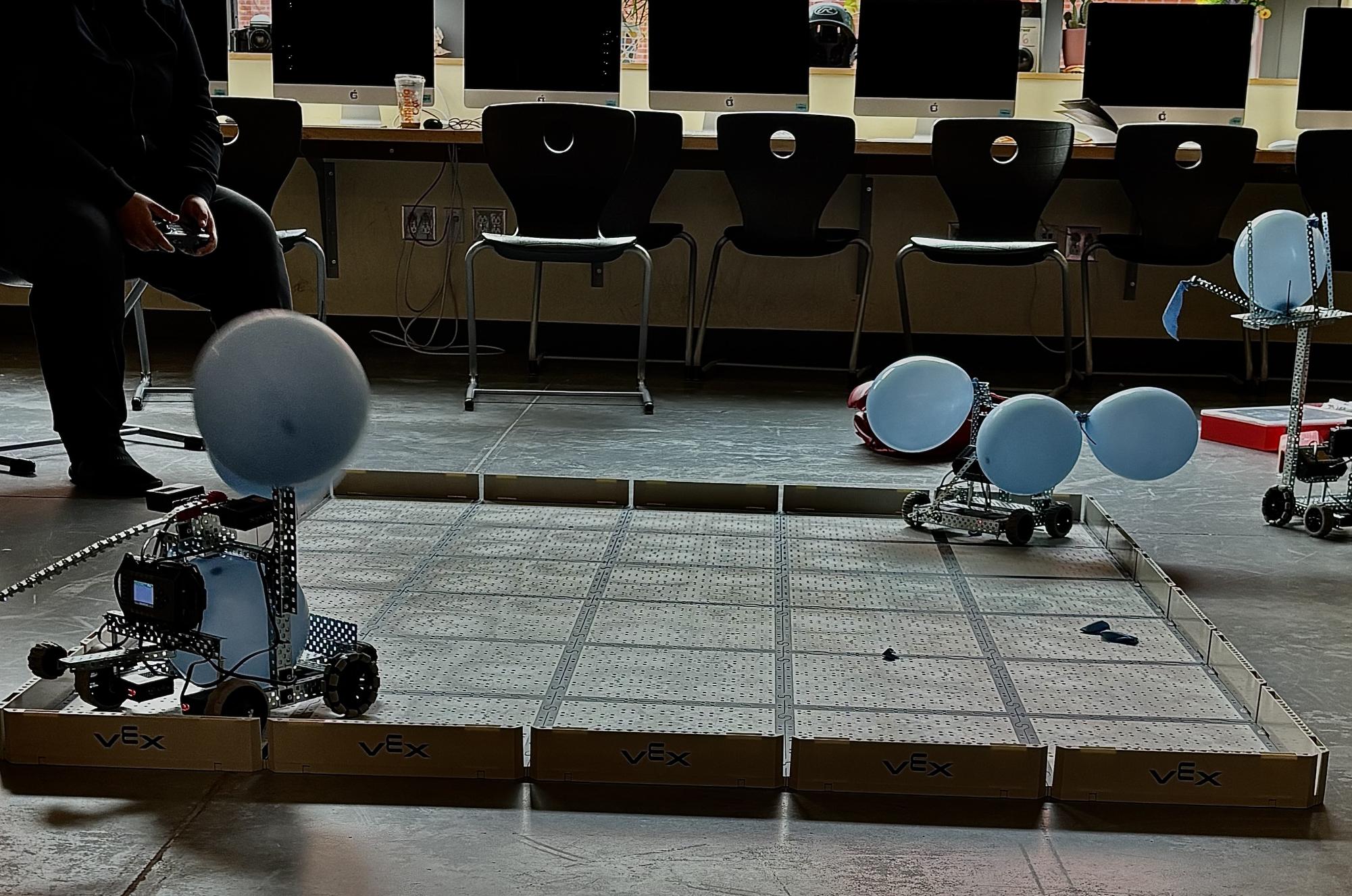
Mr. DiStefano’s F-period class held the first-ever robotics balloon popping tournament on Tuesday, November 11th, at Morgan High School, featuring 7 team from throughout Mr. DiStefano’s robotics class. The event tested students’ abilities to design, build, drive, and program robots capable of locating and popping their opponents’ balloons within a 1-minute time limit.
This was all part of the new 2025 course at Morgan, taught by DiStefano. In robotics, this competition, there were earlier units and smaller builds that led up to this. “They used a LEGO-type thing where they went off the instructions and built a specific bot, and we even did a competition where they had to move balls from one side of a court to another,” DiStefano said.
Each team’s robot was required to have at least 2-3 balloons and be controlled from a controller. Once the round began, students fought each other’s robots in a square-shaped arena, which is 8 feet by 8 feet, trying to pop as many balloons as possible to win in the 1-minute time radius provided.
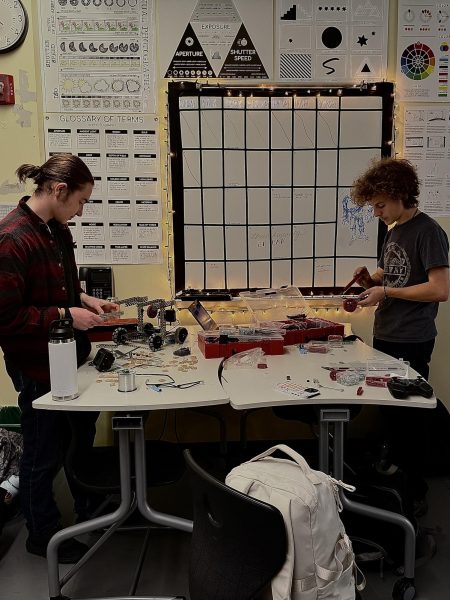
According to Mr. Distefano, Morgan’s robotics teacher and event organizer, the competition was meant to test students’ understanding of mechanical design, coding, and critical thinking under pressure. “I think the number one thing that students have lost is critical thinking,” he said. “If we can learn critical thinking and how to think critically, then that’s the goal of this competition.”
High school robotics teaches STEM skills and problem-solving through hands-on engineering and programming. Morgan School’s course uses the VEX EXP system to focus on design, sensors, and autonomous control. Funding generally comes from the school district budget or grants.
The winning robot will successfully pop the most balloons without mechanical or programming failures and move on to the next round of the bracket. Others showed creative approaches, including various popping mechanisms for when the robot is close to the balloon and navigation strategies to get around the opponent in the arena. “It’s like Mario Kart, it brings me back to my childhood, so I thought it would be fun for them,” said DiStefano
“Robotics feels different from other classes because you actually build and test things instead of just doing worksheets. I like it because it’s hands-on, creative, and lets us work together to solve real problems,” said Arielys Gonzalez
Several students faced technical setbacks during the rounds. Some struggles with sensor accuracy and pathfinding errors, such as walls or other opponents within the arena, when popping opponents’ balloons. Opponents were given time to fix their robots in between the rounds of the competition, make any repairs, or adjust their code before continuing on to the next round.
“The hardest part was getting the robot to work the same way every time; one small change could throw everything off. In robotics, even tiny differences, like a loose part, sensor reading, or how the robot is positioned, can change how it behaves, so keeping everything consistent is surprisingly tough,” said Arielys Gonzalez
As for now, the competition is still ongoing, with multiple rounds scheduled throughout the rest of the week. Students are continuing to refine their robots between matches, adjusting codes, fixing wiring, and improving their accuracy. The winner will be determined based on the total number of balloons popped before the timer runs out in the championship match.
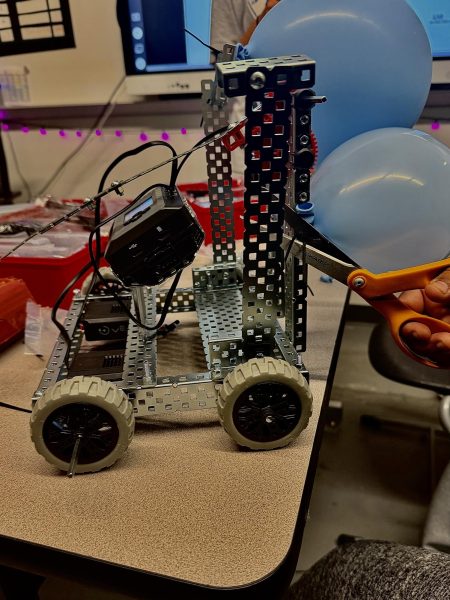
Mr DiStefano said the ongoing competition highlights both creativity and technical skill among his students. “It’s not to teach robotics per se because we don’t have robotic arms, we don’t have stuff like that, it’s teaching problem-solving through robotics, so using Vex and using drones, which we will do, they’ll be doing problem-solving through that stuff,” said DiStefano.
