
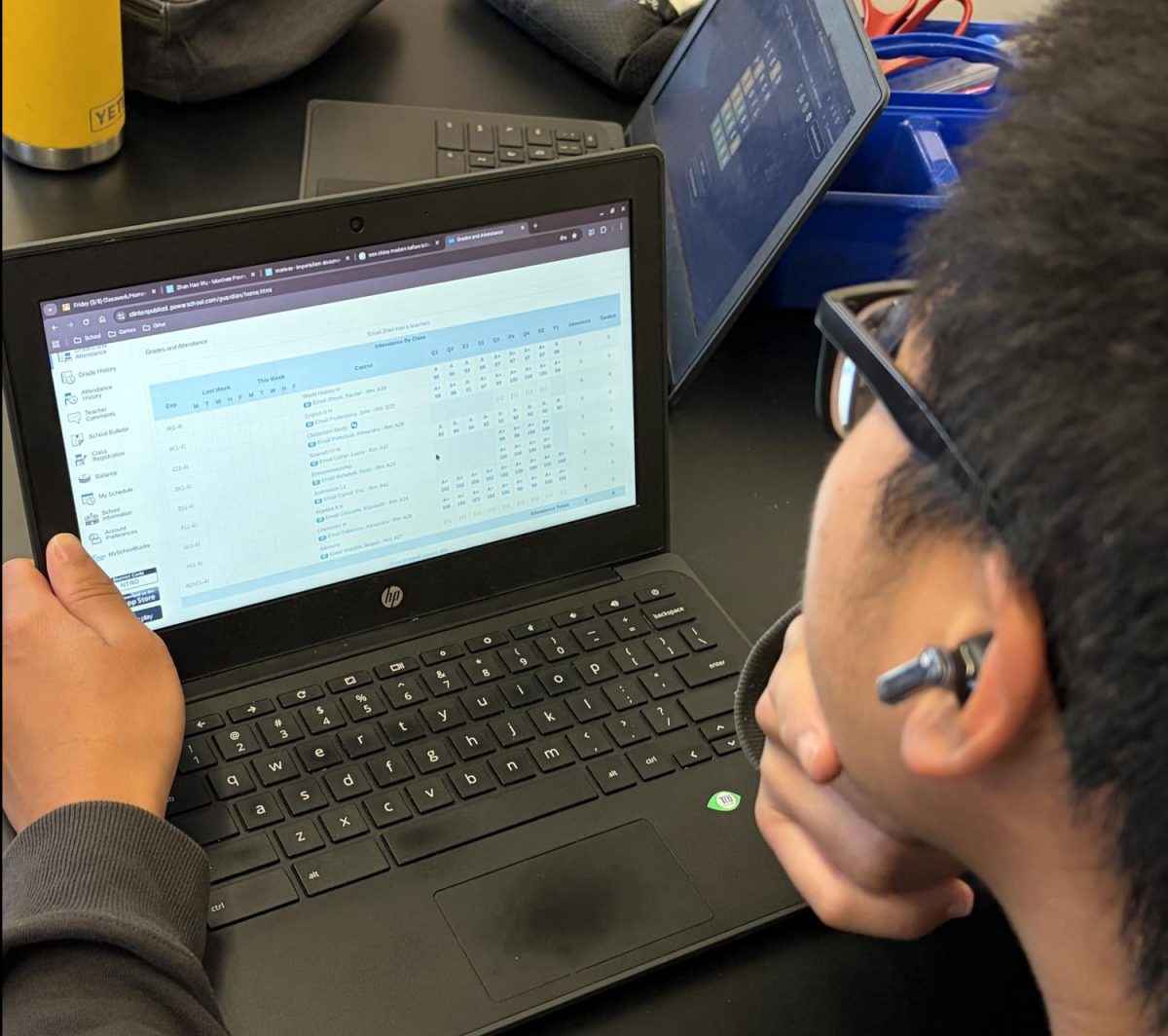
In 2015, a New York University study of 128 high school students concluded that around 49% of them experience high levels of stress due to school, with most of this stress being caused by grades and GPA.
This, on average, means that almost 1 in every 2 high school students experiences high levels of stress, just due to a number. GPA is significant, but should things such as learning and extracurricular activities in school be given higher priority?
“GPA measures how good you are at school, not necessarily how much you know or how good you are at understanding (the information),” said Gavin McCollom, a sophomore at The Morgan School and a part of 11 clubs at The Morgan School, about 1/3 of all the clubs Morgan has to offer.
McCollom is an advocate against GPA and believes that GPA is not an accurate representation of a person’s intelligence and can be too easily influenced by outside factors. McCollom brings up how GPA “doesn’t reward risk-taking” and how students might only take classes that they know they will do well in, for fear of dropping their GPA. This, in turn, brings down students who want to branch out, try new things, and figure out what they would like to do in the future.

McCollom also believes that student focus needs to be shifted from one focused on GPA to one focused on things like extracurricular activities and internships. To McCollom, these things are more beneficial long term and, unlike GPA, will actually help students in the future. “I think we need to focus more in high school, about extracurriculars, about internships, clubs, and getting people to think more about what they want to do in the future,” said McCollom.
He stresses the idea that “well-roundedness” is more important than trying to get the highest GPA possible, a term McCollom calls “GPA maxing.” What this means is that the student will do anything possible just to get a higher GPA, even if that means sacrificing knowledge along the way. “GPA tends to reward completeness rather than in-depth information,” stated Gavin. This, in turn, Gavin believes, makes people understand less.
Another thing GPA negatively affects is the ability for students to remember information after they have taken a test, as it does not reward actually knowing the information long-term. “I also don’t think that anyone cares about the long-term memory…people only care about getting that good grade,” commented Julianna Clados, a sophomore at The Morgan School and a fellow advocate against GPA. The intense pressure of GPA makes students so focused on the grade that they prioritize their short-term memory over their long-term memory. Students do things such as cramming for a test in order to guarantee a good score on the next test, only for that information to fade away a few weeks later. Due to this, students understand less and learn less as they get taught more complex topics.
“Kids are so focused on the grade, rather than the understanding,” declared Alexandra Patterson, a science teacher at The Morgan School, sharing these ideas. Patterson has firsthand experience of this in her own classrooms. She even mentioned how she is asked more about “what will be on the test,” rather than how to learn the information the test is on.

Since being in high school herself, she has seen a notable increase in the amount of effort and work put into getting a higher GPA, especially with the addition of PowerSchool. PowerSchool is a digital online app that allows students to see their grades, and if allowed, GPA, in real time, when grades are being put in for any assignments. Patterson sees PowerSchool as a root of the heightened stress toward GPA. When Patterson was in high school, they didn’t have this and instead were given progress reports and quarterly grades.
“It was less stressful, though, because I was more focused on learning everything, and the grade would kind of go along with it,” commented Patterson. Patterson also believes that parents play another key role in this stress toward GPA since they now have full access to their child’s grades and can directly influence how much kids stress about their grades.
Parents are not the only reason kids stress over grades. Other students can also play a key role through the unnecessary competition that grades create. “And it also creates unnecessary, like, almost bullying… I feel like there’s too much pressure to do good on every single test,” remarked Clados. Clados believes that outside pressure from other students can create added pressure on students.
However, there is still a reason why GPA is still in use, and it has its perks. GPA helps to give colleges an accurate look at how good a student is and how well they will perform at their college. GPA is fairly transferable and comparable between students, so it is a good way for colleges to compare students who have similar GPAs. “They want kids who can excel academically because it’ll show that you can be successful in college and local classes,” said Nicholas Grasso, a guidance counselor here at The Morgan School, with loads of experience working with kids and their GPAs.

Grasso also expressed the benefits of working hard and earning a good GPA. Grasso spoke of how any student in The Morgan School with a weighted 3.0 GPA can automatically get into many state schools, such as Eastern, Western, and Central Connecticut University, just by applying. This proves that working hard toward one’s GPA does provide key benefits and should not be overlooked.
Nevertheless, things are being done to help deal with the stress that GPA imposes on students at The Morgan School. Principal Keri Hagness of The Morgan School has taken actions and provided information to help lower the stress for students.
Principal Hagness believes it is best to “establish healthy boundaries” between one’s GPA in order for it not to be too big a stressor. Hagness compared a GPA addiction to an addiction to a phone and how a “healthy balance” is necessary.
“So I think it’s different depending upon how you use it, how often you use it, and if it’s not something that you find motivating, then realizing, okay, maybe I’m only going to check it once a week, or maybe I’m not going to check it at all,” explained Hagness on how to work a healthy relationship with PowerSchool.
Hagness also described some actions taken by the administration at Morgan to try to help overcome the stress of GPA on students. A few years back, a group of students came to Hagness and expressed their concerns about how GPA negatively affected the mental health of the students of Morgan. They had seen firsthand how bad the competition for the highest GPA had gotten and knew something had to be done. They addressed this to Hagness. “So we heard them, and we made some changes based on that,” explained Hagness.
The changes described include the removal of GPA from the access of students and the removal of the ranking system at the end of senior year. Previously, any student from any grade was able to see their GPA, and at the end of senior year, students were ranked 1-10 based on their class rank. Now, students are unable to see their GPA without asking a guidance counselor, and only the valedictorian and salutatorian are named in the top 10, while the other eight are left not knowing where they stand in the top 10.
Though GPA continues to be a serious problem that needs to be addressed, action is being taken to try to shift the pressure of GPA and its importance. Hagness and the rest of The Morgan School believe it to be essential for issues such as GPA to be addressed so they can be changed.
As Hagness declared, “We want to hear from students, especially in the arena of things that are stressing them out, so we can figure it out together… and I think that’s a good hallmark of our school, where student voice and agency matter.”