
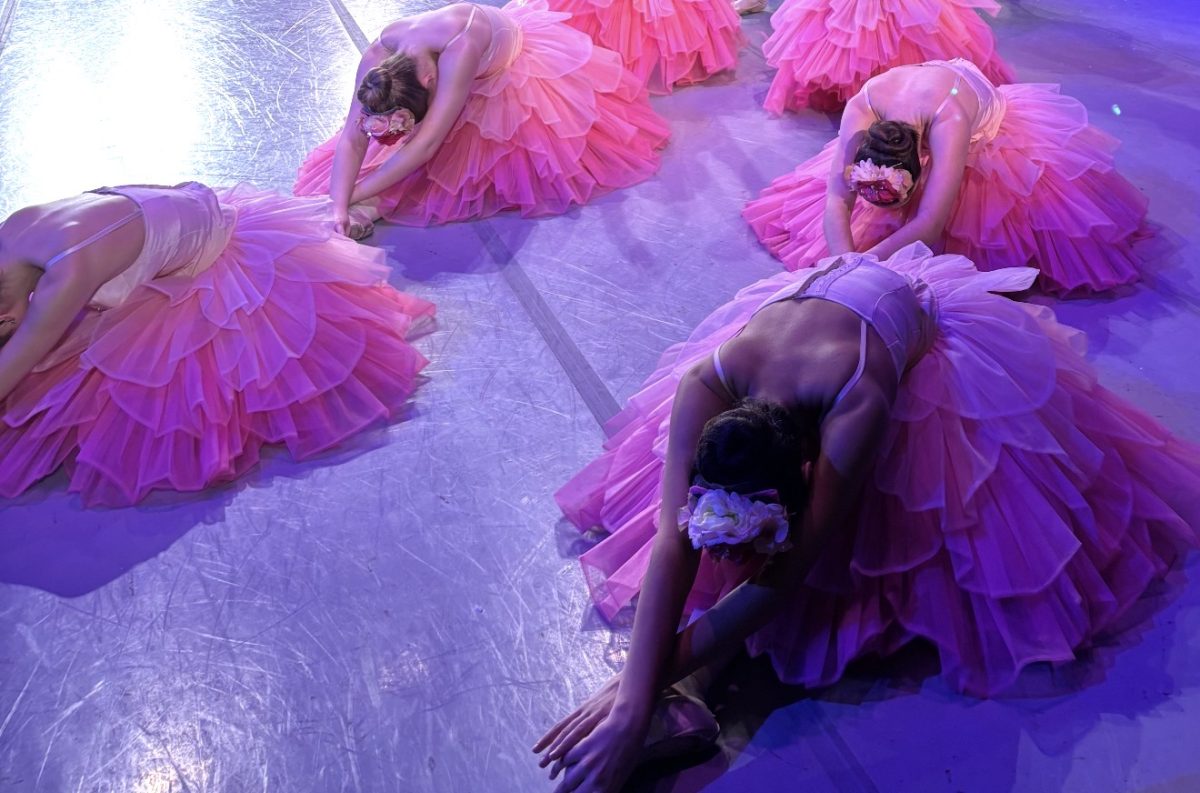
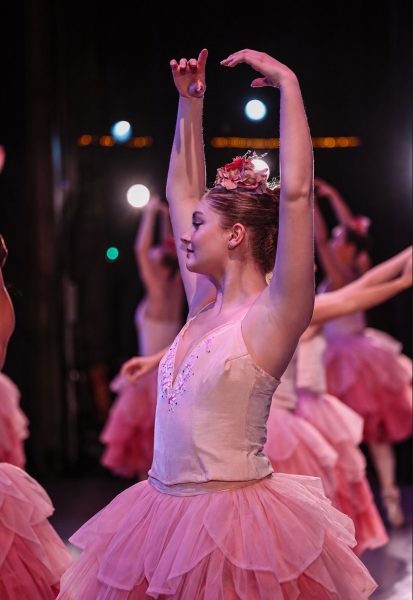
At 17 years olds, Junior Grace Holecz has spent nearly her entire life in motion. Since she was three years old, ballet has shaped her daily routine, friendships, discipline, and identity. With her nights spent in the Eastern Connecticut Ballet studio, ballet class from 4 to 5:30, pointe from 5:30 to 6:30, followed by rehearsals until 8. Saturdays often meant more hours under fluorescent studio lights, rehearsing for the next performance.
“I mainly train in ballet, so the classical movement is really my forte,” Holecz said. “But I also enjoy modern because it’s more free movement.”
Then on November 14, 2025, a pain in her changed everything. Before the injury, dance was a constant in Holecz’s life. Five or six days a week were devoted to perfecting technique, rehearsing choreography, and preparing for performances. Like many dancers, Holecz had grown used to pushing through pain. But this time was different.
The first warning came after a jump.
“I landed and felt hip pain that was different from what I’d experienced before,” she said. “It didn’t go away no matter what I did.”
At first, the doctors struggled to pinpoint the issue. An X-ray showed nothing, and the MRI appointment was delayed after being canceled. While waiting weeks for answers, Holecz returned to dance, continuing
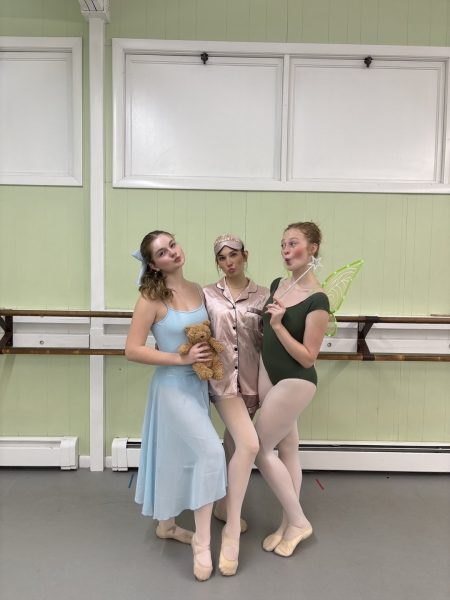
rehearsals for The Nutcracker despite growing pain.
“I didn’t want to give up,” she said. “I could only take so much class because of how much pain I was in, but I still performed to the best of my ability.”
Eventually, the MRI revealed the source of the pain: a torn labrum in her hip. Surgery soon became unavoidable.
For Holecz, the word “surgery” carried more fear than the injury itself.
“I had never taken that big of a gap off dance before,” she said. “When you take even a week off, it takes double the time to get back in shape.”
The procedure marked the beginning of a new challenge, one defined not by movement, but by stillness. After surgery, Holecz was confined to crutches and forced to rely on others for basic tasks.
“I was in so much pain that all I could really do was sleep and lay down,” she said. “I wanted to be independent and move around, but I couldn’t.”
From a dancer whose life revolved around physical expression, the recovery process became emotionally draining. The studio continued without her while she watched from the sidelines.
Still, Holecz refused to disconnect completely. Once she was able, she returned to observe classes and rehearsals, remaining close to the community that had become central to her life.
“Just being there and seeing my friends and teachers helped,” she said. “Dance is such a huge part of my life.”
Physical therapy brought its own frustrations. Holecz, once accustomed to rigorous training, now had to focus on basic exercises and rebuilding strength slowly.
“It was hard because I lost so much muscle strength in my left leg,” she said. “I wanted to move faster, but I had to slow down and trust the process.”
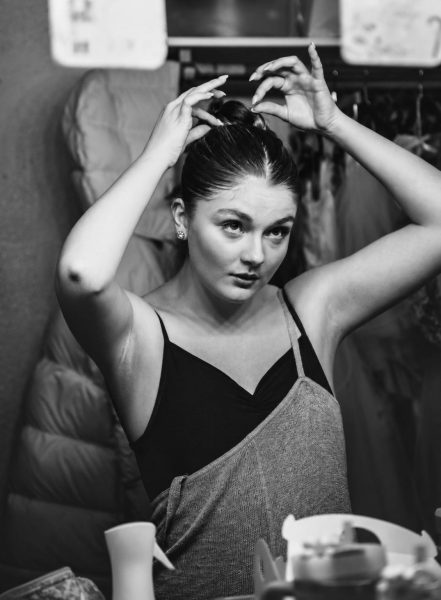
The small victories, walking without crutches, rebuilding muscles, climbing stairs, became milestones.
Her twin sister, Junior Emma Holecz, has watched each one closely.
“I am so proud of her and can’t wait to see her back up on stage,” Emma said. “She’s really working hard because dance means so much to her. I love seeing the little wins, like walking up the stairs or starting to walk easier.”
Emma said Grace’s determination has even pushed her ahead of schedule in recovery.
“She’s doing better than most patients,” Emma said. “That just shows how hard she is working to get back.”
The injury has also shifted Holecz perspective on ballet culture and the pressure dancers often feel to ignore pain.
“It made me realize that dancing through something serious just isn’t worth it,” she said. “I’m only 17. I
don’t want to live in pain for the rest of my life.”
Now, as she slowly prepares to return to the barre, Holecz admits there is still anxiety about re-injury. But there is also optimism.
“I’m confident in how much strength I’ve gained from physical therapy,” she said. “I think I’ll come back stronger.”
More than performances or applause, Holecz says she misses the simplest parts of dance most.
“Just being in class with my friends,” she said. “Jumping, turning, putting pointe shoes back on again. I’ve really missed those things.”
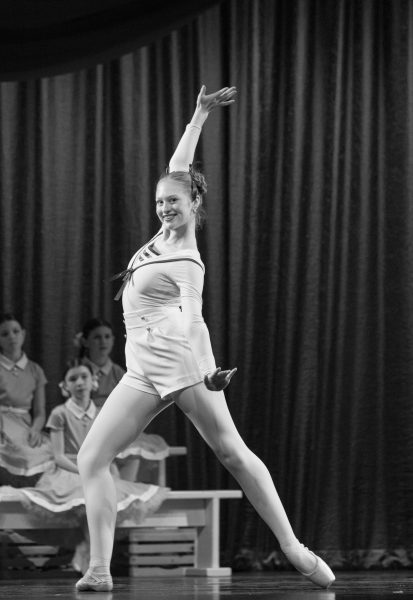
Recovery has also introduced her to parts of herself outside the studio. With more free time, Holecz has focused on academics, strengthened friendships, and discovered photography as a new creative outlet.
“It helped me figure out who I am besides just a dancer,” she said.
For younger dancers facing similar injuries, Holecz hopes they understand that stepping away does not mean losing themselves.
“Time off can actually be a good thing,” she said. “Your body tells you when it needs you to stop. You have to listen to it.”