
Every year, underclassmen select classes they would like to be in for the next year. Most students know prior to the day of selection what classes they find interest in, whether it be technology classes like Digital Imaging, art classes like Sculpture, or science classes, like Forensics. With that being said, there are definitely favorite classes at Morgan, but what makes those classes the favorites?
Electives
Electives are classes taught at Morgan that are not graduation requirements. These classes consist of art classes, technology classes, most business classes, and much more. Some electives are more popular than others, and more students sign up than others.
Introduction to Early Childhood
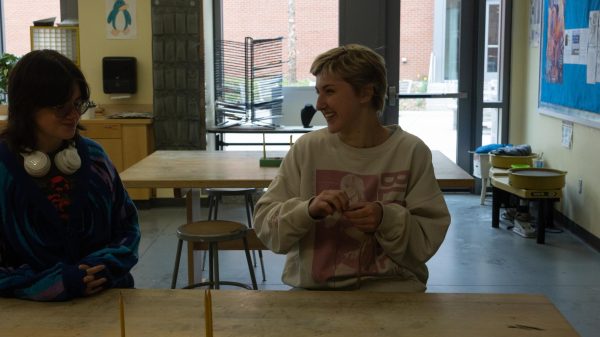
Introduction to Early Childhood is a class taught by Mrs. Murphy and focuses mainly on psychology theories in younger children during the 1st quarter. During the 2nd quarter, Murphy dives deep into development of children, stages of development, development at different ages for children.
Junior Emerson Dunning took Intro to Early Childhood last year, and said, “the second quarter focuses more on science and psychology topics rather than like actual education.”
“I knew the class was about early childhood, and I knew I was maybe interested in becoming an elementary teacher at the time or something like that, so l thought it would be a good class to take to see maybe I enjoyed it or some things, you know, so it just kind of interested me,” Dunning shared.
For the final exam, Murphy did not assign a test, but rather a project. The project revolved around creating a birthday party that matched a certain age and incorporating things that would interest the age based on the psychology of the age they had learned previous to the project.
“I think my child was like two or three, and so I had to match the developmental school skills and I had to have decorations and like activities that were good for the child and things regarding fine motor skills and stuff like that,” Dunning shared.
ECE Marine Science
ECE Marine Science is a course offered every other year. It is an elective science class taught by Mrs. Lisy. The class is mainly oceanography based and it covers topics such as biodiversity in water, acidity and pH, microplastics, and pollution.
The class especially stands out to people because of its hands on and project based approach to science. For example, the entire second semester of the class is focused on a big project that is later presented at the Symposium at Avery Point, Uconn as their final.
Senior Camryn Mazzarella took Marine last year and considers it one of her favorite classes offered at Morgan.
“It was a really hands-on class. I feel like we were always learning about something that connected to something else,” Mazzarella explained. “And all of the topics, like, went together. So I understood everything, because, say, like, we’re learning about something to do with the ocean it would then translate into, like, how waves work and stuff like that.”
“We got to feel a bunch of different types of seaweed she’d bring them in, and they’d just be like a ton of seaweed on all the tables, and we would just touch them and observe them,” Mazzarella shared.
Psychology
Ms. Shook’s Psychology class is often very popular for students because of it’s project based curriculum and interesting topics. Junior Gwen Madura took Psychology last semester, and began thinking she might want to study it in college.
“The class seemed like a challenge for me, because I have had Ms. Shook before as a teacher and I knew any class taught by her was going to be structured and work heavy. I had also heard from my friends who had taken the class previously that it was a challenge but very interesting and worth it to take,” Madura shared.
“We do a lot of projects, but my favorite project was when we had to recreate the structure of a brain with all the lobes and purposes of them,” Madura said. “I thought it was interesting to see how our brains actually worked and it was the project that made me really get into the class and begin to think about majoring in Psychology in college.”
Engineering
At Morgan, we offer three different levels of Engineering, Engineering 1, 2, and 3. All the classes are taught by Mr. Neri. Junior Taylor Breen has decided she wants to study engineering in college, and has taken all three engineering courses offered, along with Robotics taught by Mr. DiStefano.
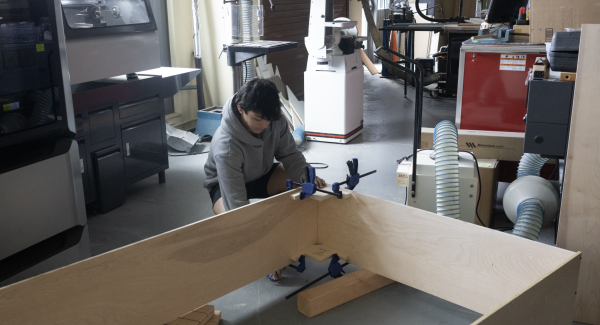
All the Engineering courses cover many different subjects and the classes teach loads of different ways to handle engineering. “You do a lot of different disciplines of engineering. Throughout the classes, we’ve done stuff from CAD design to manufacturing a boat to working a fan system,” Breen mentioned.
Breen took CAD in 8th grade with Mr. Hogle and fell in love with engineering. “Mr. Hogle recommended me to take engineering one fall of my freshman year, to see if I genuinely enjoyed it because I loved his class.”
“Then after taking engineering one, it furthered my interest and I started looking into it at colleges, especially during freshman experience, as we were exploring different career paths,” Breen shared.
Like many other classes, all the Engineering classes involve hands-on work. “One thing I really like is how project based it is. We’re constantly doing hands-on projects or works that have real world applications to really prepare you for what, like, an engineering class or what working on an engineering company would be like,” Breen explained. “One of my favorites was recently we had a recycled boat project. We had to design a boat using software and figure out how the parts are gonna work, all the, like, electrical wiring, and then we had to eventually construct a 12 foot long boat that had to float and move throughout the pool.”
Core Classes
“The term ‘core courses’ refers to the list of courses that provide a broad foundation for your education,” according to ThoughtCo.
In the state of CT, core classes are determined by a mix of graduation requirements and classes chosen by the CCS (Connecticut Core Standards), which is run by CT.gov. Core classes involve credits like 4 credits of high school English, 3 credits of math, 3 credits of social studies, and 2-3 credits of science credits depending on local school districts. For instance, at Morgan, 3 science credits are needed for graduation.
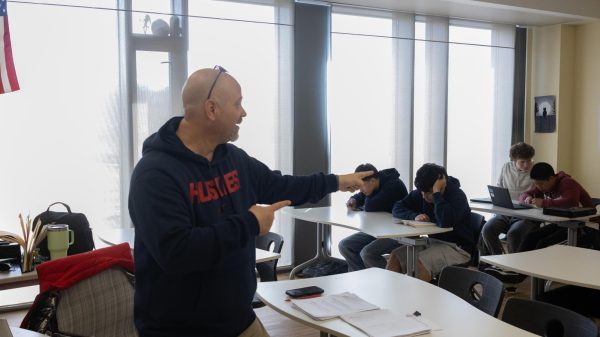
At Morgan, most core classes are offered as both level one classes or an honors/AP (advanced placement) class. Although level one classes and honors/AP classes both cover the same topics, some teachers cover those topics differently. One subject where the level one and AP class is taught very differently is Civics and Government.
Junior year, students are given the option for their history credit to be AP Government and Politics, or the level one option, Civics and Government. Although the classes cover the same topics, they are taught very differently.
This school year, 35 students chose to take AP Government and Politics, while 75 chose to take Civics and Government
AP Government and Politics is taught by Mr. Zawadski and covers various topics such as past presidents, bills in congress, branches of government, and much more.
Civics and Government is a class that revolves around a lot of textbook work, with some projects. There aren’t many in-class discussions, unlike AP Government and Politics. Often, in AP Government and Politics, Mr. Zawadski will direct class discussions that revolve around the current political affairs and allow the classes to share out their political views and their opinions on the topics.
Senior Abigayle Stack chose to take AP Gov over civics “because I thought it would challenge me in a way that civics would not. I also had heard very good things about Zawad and the class itself that made me even more interested in taking the class.”
“He talked about stuff actually going on in the world and applied it to things we were learning about in the class,” said Stack. Often, Zawadski mentions current events and problems happening in our government, such as the government shut down in October 2025, and related it to past political issues.
The class is very project based where they dive deep into certain topics, such as the “president project”. “You get assigned a group and a past president and we have to learn about that president’s life and campaigns,” Stack shared. The president project is a favorite of many students, such as Stack and junior Gwen Madura. During the project, students get assigned a president they find interesting and create a presentation revolving around the president’s life and important events they had a part in.
Although some classes seem more popular than others based on student opinion and class sizes, students should take classes they feel like they would enjoy and classes that might appeal to them in the future.
