
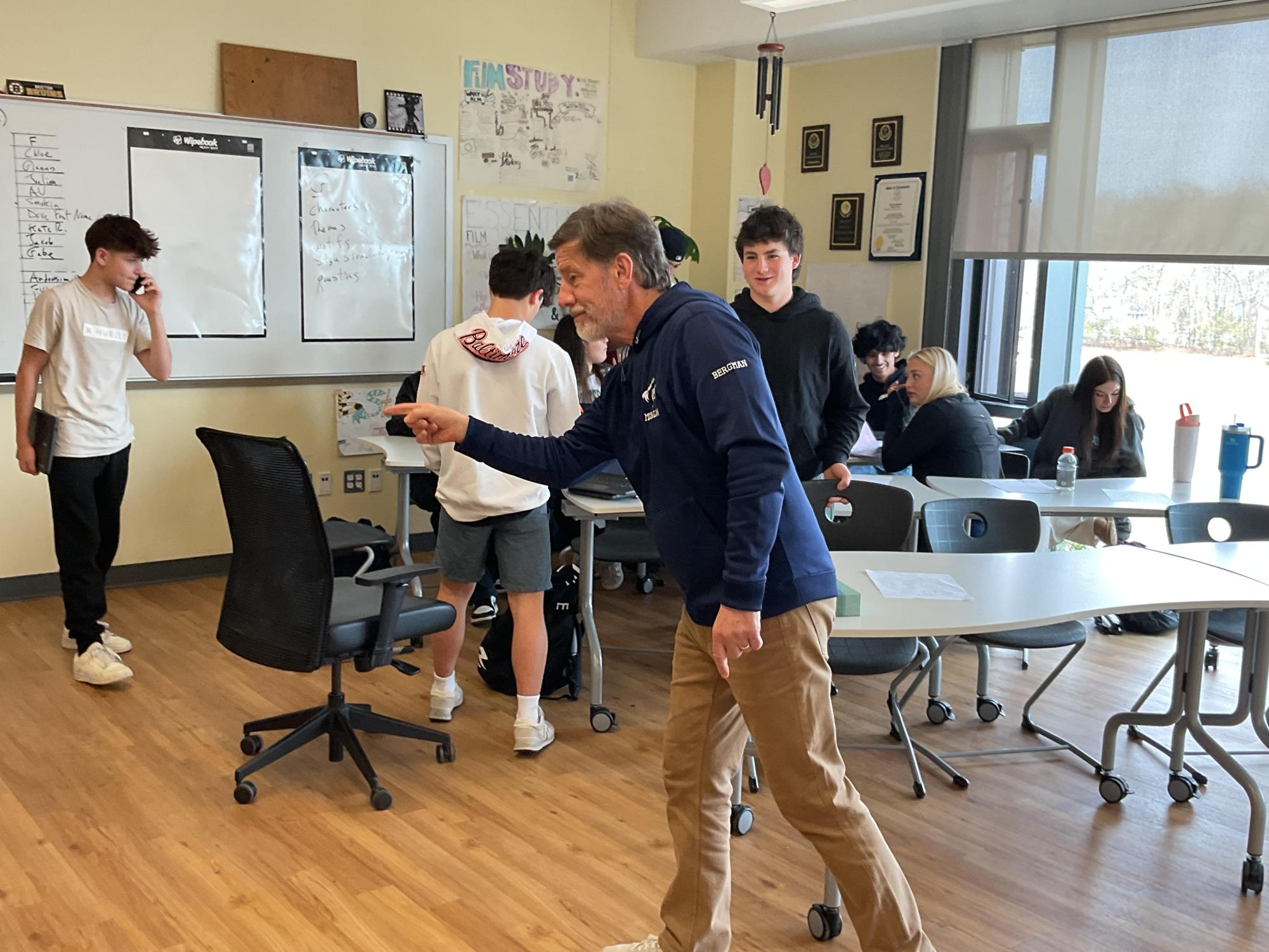
When you first arrive in room A36, after coming from either a test in science or a worksheet in English, you couldn’t be blamed for expecting the same treatment coming into Eric Bergman’s Film Study class; however, if you stay long enough, instead of being sat down to work, your more likely to be forced up and out of the room to the collab room, where for the next 45 minutes you will be given creative freedom to come up with you own silent films, or meet with teammates to discuss different film makeups, because this isn’t any normal class, this is Film Study.
Film Study is an elective class that students in grades 11 and 12 can take for a half credit, studying old films from legends like Charlie Chaplin or Buster Keaton. Film study doesn’t follow the stereotype of just watching films and doing a worksheet; it allows students to engage in films and study the legitimate reasons behind why they were made and the chemistry that went into making them. The teacher, Eric Bergman, entering his 25th year of teaching at Morgan, allows students to show their creative side with the assignments, from creating elaborate mind maps detailing a certain person or film, to coming up with their very own mock film, just like the legends did back in the day. Film Study as a class is noticeably different than the normal English or Math class, as you watch films. But those films aren’t what you’d see in theaters; they’re old silent films from the 20s-30s, for example at the start of the semester you’ll watch many short films like Castello Cavalcanti by Wes Anderson, then more towards the middle of the semester you’ll start watching films like The General by Buster Keaton and Modern Times by Charlie Chaplin.
Bergman regularly encourages students who take his Creative Writing class or have him for English to try out the Film Study class. “It’s an opportunity for students to engage with movies on a deeper level than just entertainment,” said Bergman. Bergman started teaching Film Study 20 years ago. purely due to his passion and love for film and storytelling as a whole. He’s always been interested in how movies can communicate ideas and reflect any culture.
Bergman mostly looks for creativity when it comes to assignments. If it’s colorful and unique, you’ll be fine. The limited quizzes and tests are also straightforward, like any other. It’s already been a few months into the semester, and we’ve only taken one quiz. The focus isn’t about tests, but learning. The work itself includes mind maps, where you write notes around a certain subject, taking down notes on films you will watch in class. Homework is also not to bad as at most you will have to watch a film on your own at home and be prepared to talk about it the next day.
Nathan Voelker, a senior here at Morgan, is currently taking Film Study as an elective. Film Study as a class is largely overlooked; many take it to get a “free grade.” Voelker himself doesn’t take the class as a free grade; to him, the class is a new perspective that actually takes time and hard work to complete.
“He’s been telling me to join for years, and I finally did this year and am really enjoying it so far,” said Voelker. Voelker has been opening and participating in every hands-on and creative assignment Bergman hands out, as well as openly talking and engaging with not just Bergman, but also other students in the class as well. Students largely like the change of pace in terms of the curriculum. “I like seeing how film changes throughout the years,” said Voelker.
“I would recommend the class to anyone, even if you aren’t a fan of film, because you will definitely grow to enjoy and love it during this class.”
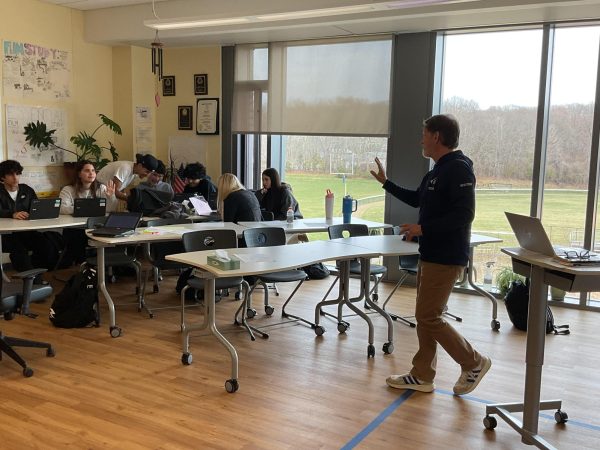
For now, Film Study is only offered for juniors and seniors, since the class is designed to broaden students’ skills, which they learn early in their high school careers, for example, critical thinking and writing.
Luckily, the class isn’t one of the ones on the chopping block, but Bergman can’t stress enough that student engagement can decide whether or not a class stays around.
“Student demand can definitely influence how courses are offered in the future.”