
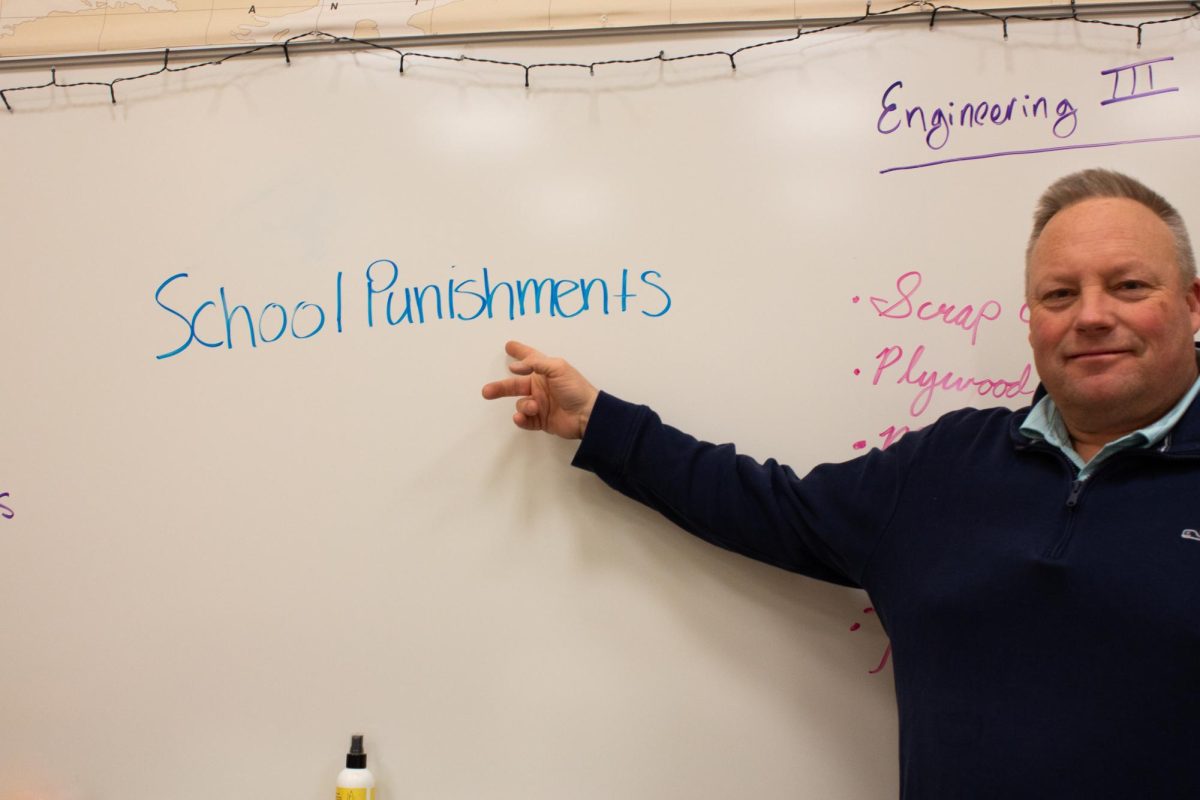
“I struggle to wake up in the morning, and I just feel like detention doesn’t work for me,” said Andres Portilla. Portilla, like many students at Morgan, has struggled to adjust to the early mornings, and therefore has had to deal with quick conversations from Mr. Luther regarding detentions. Portilla however is not unique, many students still come in late even after their detentions pointing to the question: do school punishments actually work?
Chris Luther, assistant principal of The Morgan School, acknowledges that some punishments might not always work, even after punishment, students still tend to act the same.
“I don’t know if detention always works, we try, but for students that come in late I wish there was a consequence that seemed like it was making the students want to reconsider. Because even after detention, they still tend to come in late,” said Luther.
To provide a solution to these issues, Jaidyn Hills, a senior at The Morgan School, believes that school punishments should generally prioritize personal growth over simple severity.
“I think school punishment should generally be less harsh but more meaningful. They might stop behavior temporarily, but they don’t always help students learn anything from it,” said Hills.
Hills also argues that traditional disciplinary methods often fail to produce lasting change, favoring strategies that prioritize long-term self-correction.
“I think the most effective type of school punishment is restorative or reflective discipline. I think this works better because it actually teaches responsibility and accountability, rather than just forcing compliance,” said Hills.
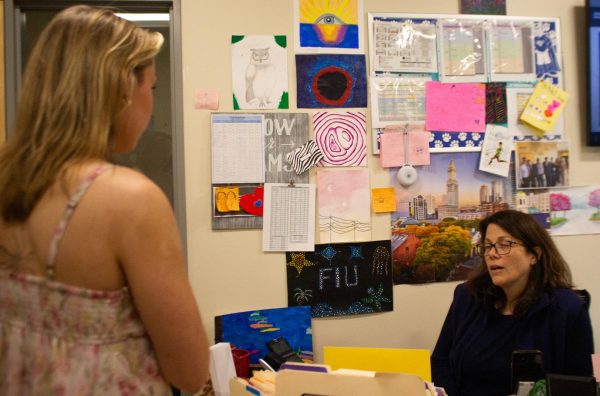
According to the National Education Association, restorative practices reduce repeat misbehavior by encouraging students to take responsibility and understand their actions. Instead of detention, students reflect and build accountability, leading to more lasting change. However, the evidence is inconclusive, as a 2023 study by Francis L. Huang, Anne Gregory, and Allison Rae Ward-Seidel found no overall reduction in suspension rates after implementing restorative practices, suggesting these methods may not work for all students.
Hills would change the use of suspensions. Adding on to the study of the NEA, he believes these strict disciplinary punishments can often come across as dismissing a student’s potential rather than a genuine effort to provide support. Which could explain why these methods may not work for all students.
Changing practices might bring down a comparably high suspension rate. In the 2024-2025 school year, The Morgan School had a 13% suspension rate compared to other schools around such as Daniel Hand High School who only had a 3.7% suspension rate, and Old Saybrook High School who had a 3.5% suspension rate.

“If I could change one thing about school punishments, it would be to reduce the use of suspension and replace it with more in-school supportive punishments. Suspension can feel like the school is just giving up on a student rather than helping them.”
Andres Portilla, a sophomore at The Morgan School, has a similar view, that schools should be more focused on helping students with behavioral issues rather than strict punishments that won’t help.
“School discipline should shift away from strict or excessive punishment and focus more on meaningful consequences,” said Portilla.
Andres also believes that by emphasizing the social consequences of a student’s choices, schools can encourage a genuine internal shift, rather than just temporary obedience.
“When students understand how their actions affect others, they are more likely to take responsibility and change their behavior. This approach teaches lessons that last longer than simple punishment,” said Portilla.
Across the country, some districts have replaced suspensions with restorative practices like mediated conversations, circles, and conflict resolution. In Chicago Public Schools, a University of Chicago study found that after implementing these methods back in 2013-2014, out-of-school suspensions dropped 18% and student arrests fell, while students reported a stronger sense of belonging and a more positive school climate.
However, Chris Luther, the assistant principal of The Morgan School, believes that discipline decisions are not taken lightly, and that there is thought behind it.
“Before we decide on consequences, we usually spend a good amount of time making sure that we feel like it’s the right consequences,” said Luther.
Schools often use progressive discipline and consult administrators for serious situations, just to make sure all staff are on the same page.
“If it’s a serious consequence, we always inform the assistant superintendent, if not the superintendent, just so we’re all on the same page,” said Luther.
These perspectives of both staff and students suggest that the issue isn’t about having more or less punishment, but better punishment. Schools should focus on consequences that help students learn and grow, not just ones that temporarily stop behavior.