

Recent data from the U.S. Bureau of Labor Statistics indicates that 19% of U.S. adults are actively engaged in starting or running a new business, matching the record levels observed in previous years. With entrepreneurship growing, it presents high schoolers with the question: is college the only path?
While The Morgan School students are in the process of planning their next steps, many see college as the only option or don’t have a full understanding of alternate paths. As a higher education can be valuable for some, it is not a guaranteed path to success for all. For Morgan students who find strength and interest outside the traditional classes offered in high school, alternate paths like entrepreneurship can be just as valuable.
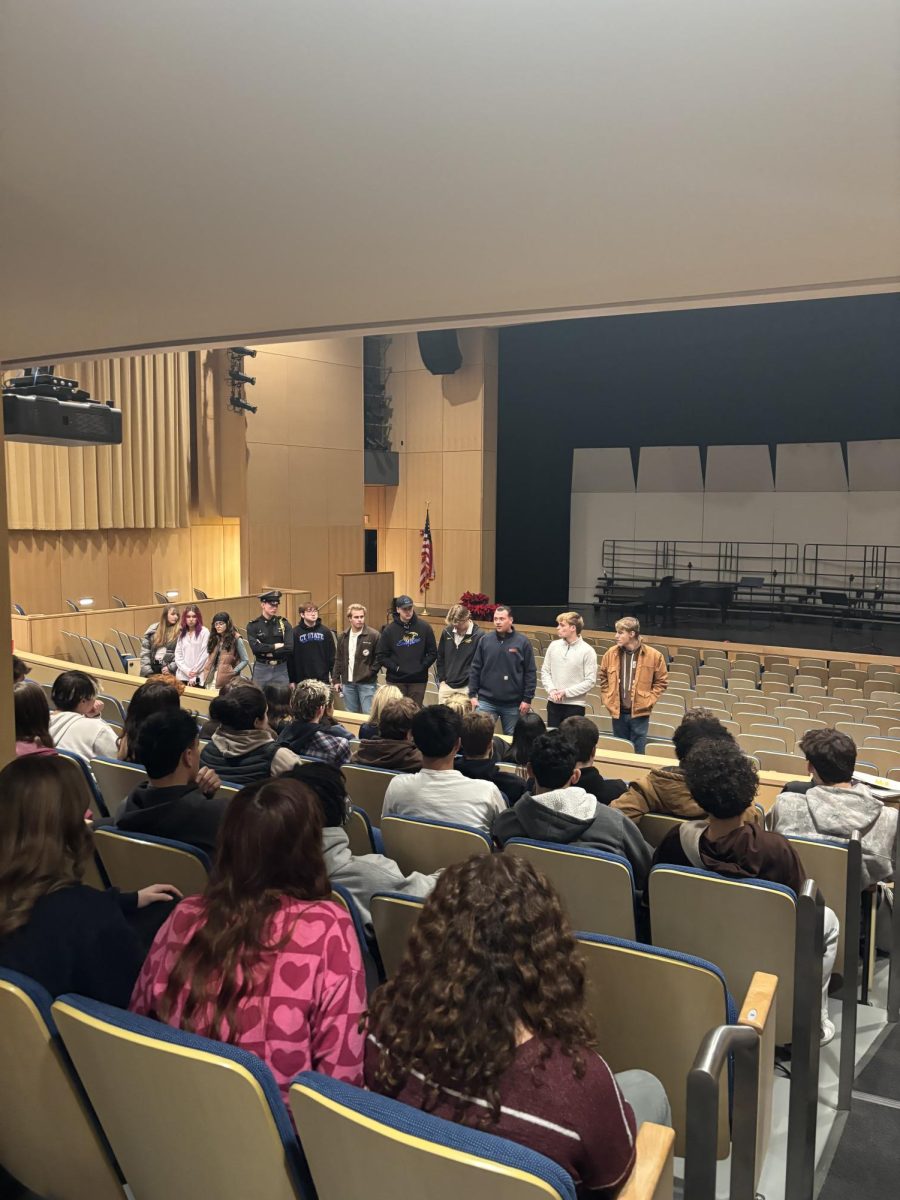
Pawprint sat down with two local business owners, including a Morgan alumni, who demonstrated the different ways to succeed post high school.
Morgan graduate Joseph Ciarleglio realized college was not in his future after his junior year at Morgan. While writing his college essay with his classmates, he discovered something different about himself.
Ciareglio shared, “When my classmates and I started writing our college essays, I realized that mine was written about my social aspect, and so that turned me to the sales path.” Recognizing his strength in communication and social interactions, he was pushed towards a career in sales rather than receiving a higher education.

than attending college, Ciarleglio entered the workforce. Learning the ropes working for his father’s company, J and J, where he sold trucks and equipment. He also assisted a paving company, which helped build his sales experience. Eventually, Ciarleglio opened his own business, Ciarleglio Truck and Equipment Sales, in Branford having the same goals as his fathers business and using all that he learned when working for his dad.
An issue in the sales world Ciarleglio quickly figured out was not having a guaranteed paycheck. Ciarleglio reflects, “you need to work for it, it’s not a given. You have to hunt for clients that want and need your product.”
Starting a business, Ciarleglio started to think about short term versus long term goals and expectations. “Trying to focus on what was more important now than in 20 years,” Ciarleglio explained. Learning to focus on personal growth and building his new company, Ciarleglio realized, “all that mattered was what I could achieve in this time period.”
Looking back, Ciarleglio does not think college would have benefitted his career. “What I do now, you do not need any type of degree for,” said Ciarleglio. “All you need is confidence in yourself to work hard and be something more than you are in the present.”
Michael Tanner, owner of Tanner’s Tree Service, took an alternate route and did not always envision himself owning and running his own company. After high school, Tanner chose to attend Springfield College majoring in physical education, influenced by family history. “All four of my parents were teachers,” he explained, “so that’s what I thought I wanted to do.”
It wasn’t until student teaching when he realized that it was not the right fit. By the time he graduated, his career goals had changed.
Although after college, Tanner did not use his degree in the classroom, he still sees college as valuable. He credits his experience at school with teaching him life skills. “You learn how the world works, how business works, financial stuff and responsibilities,” he said. Tanner believes that all the things he learned while at school ended up helping him start and run his own tree service company.
However, owning a business came with many challenges and pressure. Tanner explained how owning a company is very stressful, especially when employees rely on you. “You got their lives in your hands,” he said. “You have to make sure they have work and that they’re taken care of.”
Having to worry about safety on the job as well as making a sustainable income for both yourself and employees, the reality of running and tree service is far more demanding than it appears. Each job has several risks along with pressure to make the right decision, after decades in business Tanner admits that the responsibility can be overwhelming.
The stories of Ciarleglio and Tanner demonstrate that there is no “right” path post high school. Whichever path is taken, their stories encourage students to explore and understand options that align with their interests and strengths.
