
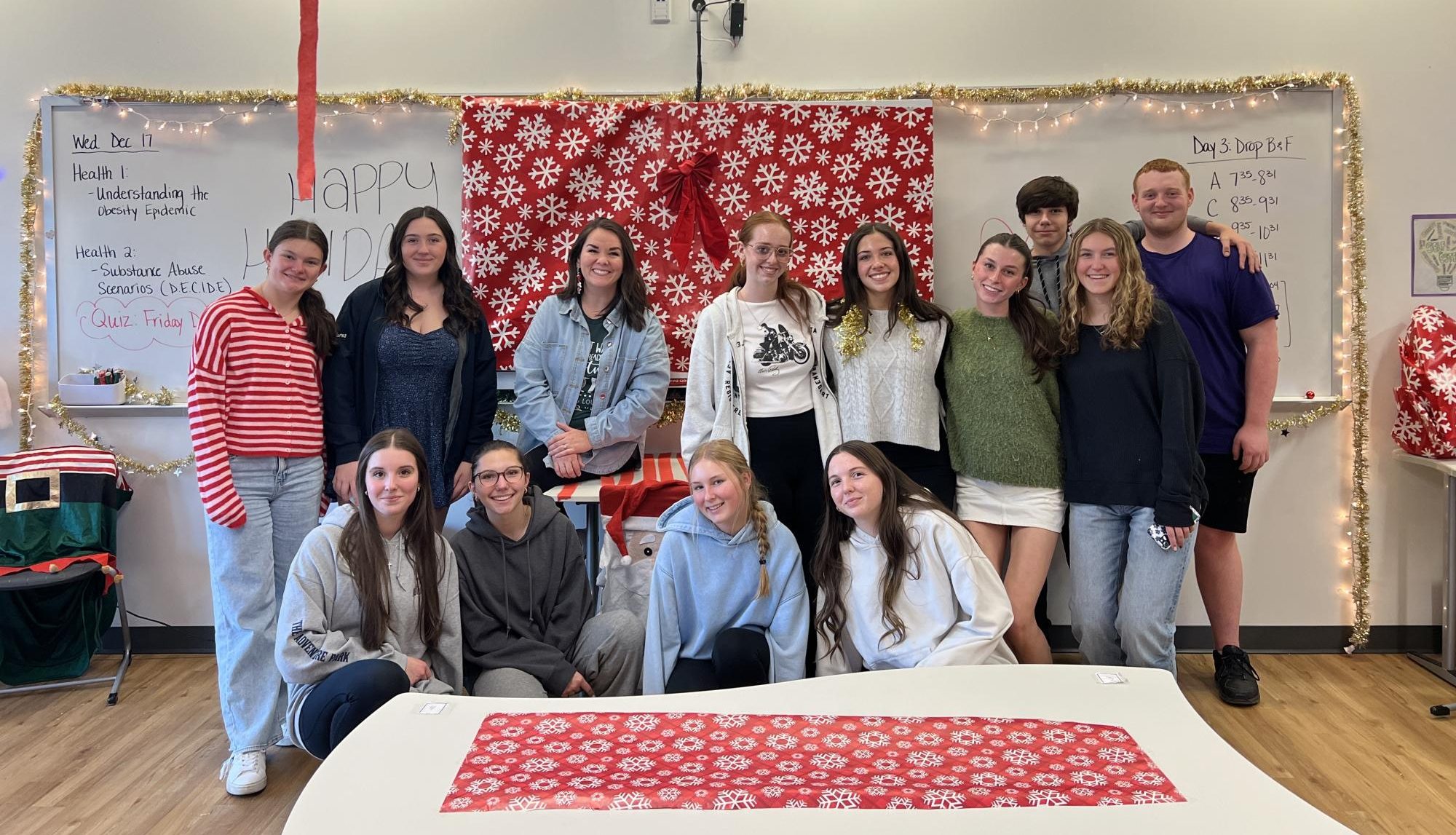
It was the day of Homecoming and Spirit Squad Advisor, Stephanie Davis, found herself trying to organize an entire dance with only herself and three volunteers. Thinking about missed time with her family, Davis began to ask herself whether or not she’d be able to continue advising this club. For Davis, Spirit Squad “Isn’t really a club where you can just kind of come and go as you please. There’s usually something we’re trying to work towards and if I don’t have the help, we can’t get it done.” The reality of the situation, Davis says, is that “if I don’t have the help, I can’t do it.”

Clubs are an integral part of student life at The Morgan School, enriching students’ high school experience, giving them opportunities to explore their interests, and providing them with the choice to get involved in the community both in and out of school – not to mention the appeal they bring in resumes. Recently, however, it has become apparent that there has been a decrease in student engagement and participation in said clubs.
Fewer students have been attending meetings, taking on leadership roles, and staying involved throughout the year. This drop has raised concerns for club advisors regarding their ability to keep their clubs in motion.
Spirit Squad, an event planning club at Morgan, is advised by Stephanie Davis, who has noticed a trend in students participation. Davis feels that participation peaks at the beginning and end of the year but typically dips in the winter. She suspects that the peaks of interest are due to the homecoming dance planning that takes place during those months. Davis thinks that, “people like to be involved in the planning and like to have a say in what’s going on.”
Davis feels that engagement has changed, “beyond just the ebb and flow throughout the year.” Davis suspects that “people have come to assume even if they don’t show up, things are still going to happen,” but this is not the case. For clubs like Spirit Squad, which essentially tackles the school’s event planning, student help is the sole factor that keeps it going.
Davis has tried to gain sympathy for students’ inconsistent attendance, however the situation has begun to impact her life outside of school. Davis referenced this past homecoming when she had a list of students who had volunteered to help. To her disappointment, only three of those students showed up. She shared that, “I therefore didn’t get to see my kids for the whole day because I was setting up for homecoming.”
For Davis, Spirit Squad “Isn’t really a club where you can just kind of come and go as you please. There’s usually something we’re trying to work towards and if I don’t have the help, we can’t get it done.” When students don’t participate, teachers are “made to feel like [their] time isn’t valuable.”If the issue doesn’t resolve, Davis says, “[she] would have to rethink being the advisor.”
Student Government and Kindness Closet (a club that helps disadvantaged students and families in the Clinton community) advisor, Laura Luther, has noticed similar inconsistencies.
Luther feels that the reasons students cite most frequently for not being able to attend are not having rides and having other commitments. Luther acknowledges the scheduling conflicts that students face and she tries to accommodate, explaining, “we just try to do what’s best for the majority.”
To boost attendance, Luther highlights with her students the importance of follow-through. Luther tells her students, “you need to make sure that you accomplish everything that you said that you would do.” She emphasizes this especially with Student Government, and reminds them that they were chosen by their peers for a reason and that they must commit to doing what they promised.
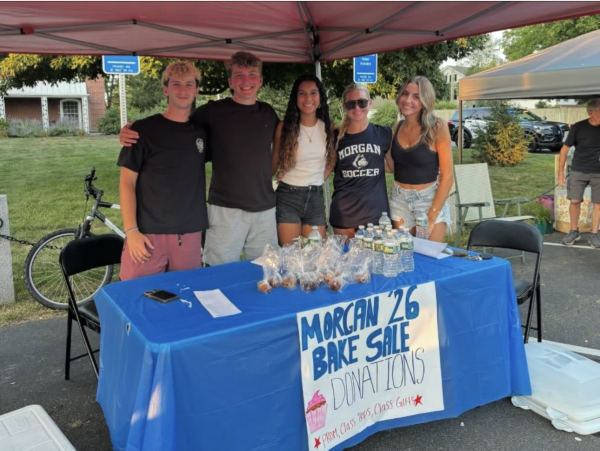
While Kindness Closet currently has 12 members, Luther says, “I would like 200 members because I would like the world to be kind to each other – but the kids, they’re doing a really good job, the ones that show up.”
Luther believes that extracurricular activities helped her to develop into the person she is today. She feels that they “have the ability to push you beyond your limits, make you feel uncomfortable in a positive way, help you to grow, allow you to meet new people, see people in different lights, understand different cultures.” Luther believes that at Morgan especially, “we’re so lucky that we have so many different clubs that are offered – that there’s something for everybody and everyone just needs to find what they love and do it.”
National Honor Society advisor, Kelly Gilbert, feels that “it can be really difficult getting enough student interest and participation to get ideas off the ground.” Gilbert shared that the students have great ideas, however the organization, initiation, and follow-through is not always up to par.
Gilbert noticed that meeting time has had an effect on participation as well. Meetings before school bring up issues like “transportation, sleeping in, and students with A period privilege[not having a class, therefore not wanting to come to meetings]” After school meetings bring up issues of “transportation, sports practices and games, and students with H period privilege.” Gilbert ultimately concludes that there is no perfect time that works for everyone.
With NHS being part of a national organization, attendance is mandatory. Members are aware that they are required to uphold the standards under which they were inducted, this includes exceptional attendance. If students wish to continue their membership, they must take responsibility for this aspect of NHS. This addresses the meeting attendance situation, but that still leaves the issue of participation at other NHS events.
Gilbert takes a similar stance to Luther when it comes to the benefit of clubs and extracurricular activities on students. Gilbert expressed that “Extracurriculars are so important for helping students develop into well-rounded humans and so students have an opportunity to feel like they are a part of something.”
Gilbert hopes that her students continue to push to be more involved in the community and have even more of an impact than they already do. That being said, she explained that it’s up to the students. Gilbert sees it that the clubs belong to the students – she is “just here to facilitate what they hope to accomplish.”
Gilbert leaves her final thoughts that, “If the students want more, I’m here for it, and will do everything I can to support them…but I need their help, ideas, participation, and enthusiasm or nothing will be successful.”
While advisors continue to adapt and support students to the best of their abilities, low participation is a recurring issue amongst the student body. Clubs at The Morgan School are more than just resume builders, they provide the students with opportunities to develop themselves as individuals. Advisors can guide, encourage, and support students, but they cannot sustain these clubs without the help of the students. If students want these opportunities to remain available, they must recognize the value of showing up and taking initiative in these communities they chose to join.